Trauma Therapy
Trauma doesn't always look like a single dramatic event. Sometimes it's the slow buildup of moments that never had a safe place to land. It can show up as anxiety, flashbacks, a racing mind, or a body that stays tense even when nothing is wrong right now.
Left unresolved, trauma can quietly distort how we see ourselves, leaving us carrying blame or responsibility that was never truly ours to hold. It can also make closeness in relationships feel confusing or unsafe, even with people we trust.
Addressing trauma matters because those old wounds don't just fade on their own; they need real space and support to heal. EMDR is one path worth exploring on that journey.
EMDR Therapy
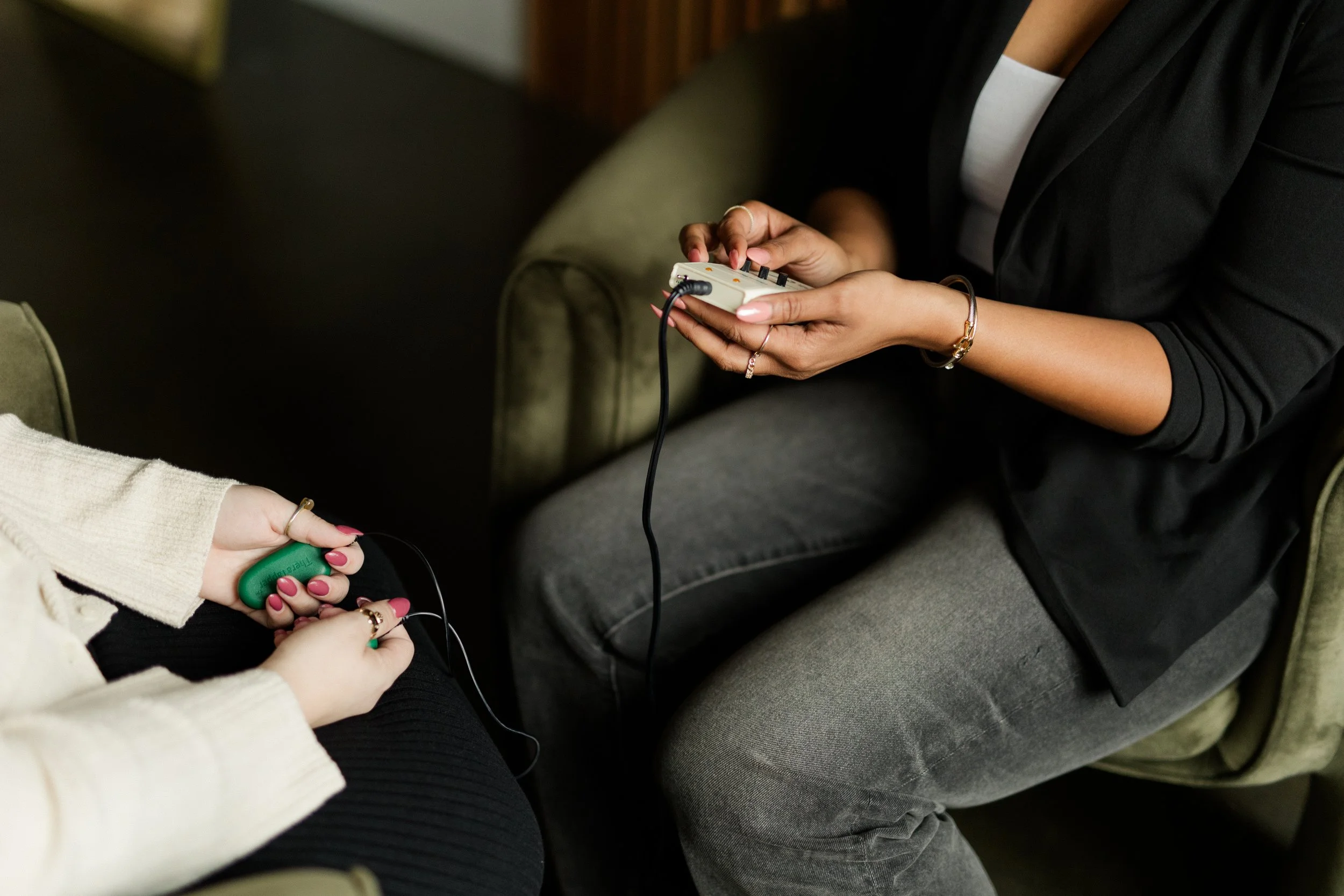
Some memories stay lodged in the body long after the event has passed, keeping your nervous system on high alert even when the event is over.
EMDR is an evidence-based therapy that supports nervous system regulation by helping the mind and body work together to process what's been stuck. Using bilateral stimulation (BLS), like guided eye movements or gentle tapping, EMDR helps your brain reprocess difficult memories so they no longer carry the same emotional charge.
Over time, many clients notice their body feels less reactive, with more ease, better sleep, and a greater sense of calm.
Relationship & Couples Therapy

If you're in a relationship and keep noticing the same unhelpful patterns play out, whether that's pulling away, over-giving, or bracing for conflict before it even starts, individual therapy offers a space to understand where those patterns took root. This work looks closely at the defenses you've built over time, aiming to help you find steadier, more secure ways of showing up for the people you love, without losing yourself in the process.
Couples often find themselves caught in the same fight on repeat, just dressed up in different words each time. Usually, the real issue isn't the dishes or the canceled plans. It's the older wounds and unspoken needs surfacing in the middle of everyday moments.
With Emotionally Focused Therapy (EFT), couples can start to recognize what's really driving the conflict and build a stronger, more secure connection, one where defenses no longer get in the way of the closeness you're both after.
Sport Performance Therapy

The biggest obstacle for an athlete isn't always physical, it's mental. A bad game or a single missed play can turn into a block that's hard to shake, showing up as hesitation, overthinking, or negative self-talk right when it matters most.
Athletes can get stuck replaying the same mistake, unable to move past it no matter how much they practice.
Using EMDR, I work with athletes 16 and up to clear these mental blocks at the root, helping your brain move past the loop so you can trust yourself and play with confidence again. Over time, those old triggers stop pulling the same reaction from your body, leaving you free to compete with more confidence and less hesitation.
Frequently Asked Questions
-
EMDR is best known for treating trauma and PTSD, but it's also used for anxiety, depression, grief, low self-esteem, relationship struggles, performance blocks, phobias, and chronic pain. In general, it helps with anything where a past experience, or pattern of experiences, is still driving how you think, feel, or react today.
-
EFT helps untangle recurring arguments, closed-off communication, shaky trust, and the sense of being caught in the same loop, so you can move toward a deeper, more secure bond. It's used with couples, individuals, and families.
-
I use a combination of EMDR and CBT with athletes 16 and up. EMDR helps clear mental blocks and stuck moments, like replaying a bad play, while CBT targets the negative self-talk and thought patterns that show up under pressure. Together, they help athletes move past what's been holding them back and compete with more confidence.